Why Choose Abes Baumann For Workers’ Compensation and VA Benefits Cases

A workers’ compensation lawyer helps employees who are injured on the job obtain benefits, such as medical care and temporary and permanent disability payments, and protects them against profit-driven companies that halt or deny legitimate claims. 

While it’s possible to file these claims on your own, the processes in many of these cases are complex, time-consuming, and stressful. Choosing the right workers’ compensation lawyer means working with legal advocates who know the ropes and can help navigate issues more effectively. 

Continue reading to find out why choose Abes Baumann for workers’ compensation and VA benefits cases.

Why Choose Abes Baumann?

Choose Abes Baumann because:

  • We are a team of attorneys focused on Workers’ Compensation and Veterans’ Benefits
  • You’ll work with an attorney experienced in cases similar to yours
  • We help navigate deadlines, paperwork, and complex processes
  • No fee unless you win, in most cases
  • We have decades of experience helping veterans and injured workers

Why Choosing the Right Workers’ Compensation Lawyer Matters

why choose abes baumann; workers' compensation lawyer; va benefits attorney

Choosing the right lawyer is crucial because workers’ compensation rules are strict and deadlines are rigid. If missed, there is a chance of a permanent bar from receiving benefits.  Employers and insurers may also challenge your claim, making it difficult for you to claim your benefits. 

An experienced workers’ compensation lawyer can help you fulfill the requirements, meet deadlines, and protect your rights against employers looking to challenge your claim at every turn. 

Why Choosing the Right VA Benefits Attorney Matters

VA claims can be complicated and time-consuming

VA claims often involve extensive paperwork, bureaucratic regulations, and strict legal definitions. A successful claim and the securing of benefits, therefore, require a clear understanding of all these intricate components. 

Navigating eligibility, overcoming hurdles in medical evidence, and establishing service connection are complicated and time-consuming steps that can be made easier with the assistance of the right attorney. 

Denials happen, even when the case is legitimate

A legitimate case doesn’t automatically mean approval. Many veterans face initial denials. That said, a denial is not the end of the road. There are appeal options you can take.  However, it does require strong documentation and strategy. 

This is where a VA benefits lawyer comes in. The right attorney can devise a legal strategy that’s focused specifically on the root cause of why the case was denied in the first place and opt for the most suitable appeal option.

A VA benefits attorney can help you build a stronger claim

Gathering evidence to support claims is one of the most essential requirements for a successful application. 

A VA benefits attorney can help gather and organize medical records and supporting documents to complete evidence for building a stronger claim. This is done by identifying missing information, securing medical opinions (a nexus letter), and drafting a strong legal argument. 

Why Clients Choose Abes Baumann

why choose abes baumann; workers' compensation lawyer; va benefits attorney

Attorneys focused on Workers’ Compensation law

Attorneys at Abes Baumann specialized in workers’ compensation and VA benefits. With this focus comes ample experience dealing with different types of issues. 

We’ve seen many pitfalls people have fallen into: from paperwork errors to missed deadlines to being outmaneuvered by employers. Clients get a specialized attorney to work with them personally, preventing them from being passed to someone unfamiliar with their issue.

You will not see a bill unless you win

No win, no fee. Meaning there are no upfront fees, and there won’t be any bills for you to pay unless the case is won.

Attorney fees in VA appeals are typically contingent on recovering retroactive benefits— the money the VA owes you dating back to your original filing date. 

Decades of experience and proven advocacy

Another reason why you should choose Abes Baumann is our invaluable decades of experience and proven advocacy. 

We’ve seen all kinds of challenges and understand which tactics and maneuvers are used against employees, so we also know how to deal with them precisely and effectively. We work to be your close partner in achieving what’s best for your situation.

Support beyond paperwork

Organizing paperwork is undoubtedly an important part of the process. However, we work beyond just that. 

We’ll also take the extra steps, such as finding the right doctor and assisting with any other matters our clients might need, including organizing medical expenses and providing clear guidance throughout the process. 

Our goal is to help make these complex processes less overwhelming and clearer for you. 

Do You Need a Lawyer? Here Is the Honest Answer

why choose abes baumann; workers' compensation lawyer; va benefits attorney

You might, and early guidance can prevent problems later

There are certain situations where lawyers are not necessary, such as filing a standard claim. The VA system allows everyone to handle everything themselves. 

However, an attorney is highly recommended if you’re experiencing complex issues, such as benefits that are threatened or denied. Moreover, early consultation with a lawyer is helpful in preventing mistakes that can complicate and intensify issues. 

Signs you should speak with a workers’ compensation lawyer

Speak directly with a workers’ compensation lawyer if your claim is denied, benefits stopped or reduced, treatment not approved, or pressure to return to work too soon. These cases are delicate and require strong legal arguments to achieve the best results. 

Signs you should speak with a VA benefits attorney

Contact a VA benefits attorney if you’re experiencing a VA denial or low rating, confused about evidence requirements, and having complex conditions, multiple diagnoses, or a toxic exposure history. 

These situations often involve legal roadblocks that require legal help, as well as an accurate and timely response to resolve issues and prevent escalation.    

Contact Abes Baumann

If you need assistance in getting VA benefits and workers’ compensation, contact Abes Baumann today

Rest assured that we will handle your claims, process paperwork, navigate disputes, and help protect your legal rights throughout the claims process, drawing on our knowledge and experience to pursue the strongest possible outcome for your circumstances. 

We seek to be your trusted source of help, providing service beyond just paperwork. We work with clients to ensure cases are handled thoroughly and effectively.

What is the PACT Act, and How Does It Impact VA Benefits?

What is the PACT Act? Veteran salute

Our veterans have sacrificed a lot while serving our country, and it is just right that they be provided with the best health care and benefits. 

The PACT Act, which is one of the country’s largest expansions of health care benefits for veterans, was introduced to ensure that our former service members receive care and compensation for certain toxic exposure-related conditions. 

This article explains what the PACT Act is and provides additional information, including who may apply and the requirements. Read on to learn more.

Quick Answer: What Is the PACT Act?

The PACT Act is a law that expands VA health care and disability benefits for veterans exposed to toxic substances during their service. It adds to and expands presumptive conditions associated with exposures to burn pits and other toxins. 

Throughout this article, you will learn more about:

  • What counts as a PACT Act condition
  • Who may qualify
  • What “presumptive” means
  • How to file and what mistakes to avoid

Why the PACT Act Matters for Veterans and Their Families

Veteran in uniform standing and smiling

Toxic exposure injuries and illnesses are more common than many realize

Toxin-related illnesses and injuries may not appear immediately, unlike other injuries such as wounds or amputations, which are direct and obvious. 

However, toxic exposure illnesses are more common than many people realize. Toxic exposure, such as from burn pits and Agent Orange, can cause long-term respiratory problems, cancer, and other chronic illnesses. One study indicated that toxic-related illnesses from U.S. military service are highly prevalent.

Benefits can be life-changing, but the process can be complicated

Health and financial benefits for veterans can no doubt be life-changing. However, the process can sometimes be complicated.

For instance, VA paperwork that needs to be completed, medical evidence required, and deadlines to be met, all can create barriers, which make it hard and time-consuming for veterans and their families who badly need prompt help and support. 

The PACT Act can make it easier to qualify in certain cases

The PACT Act, along with its expanded protections against illness, makes it easier for vets to qualify in certain cases.

The presumptive conditions, which eliminate the proof of connection, mean that veterans do not need to prove that the illnesses they suffer were directly from toxic substances. This means the process is accelerated by the reduced proof burden in qualifying situations.

What Does “PACT Act Conditions” Mean?

The PACT Act conditions generally refer to illnesses the VA recognizes as connected to certain toxic exposures under presumptive service connection rules. Eligibility may depend on whether a condition is considered presumptive or non-presumptive by the VA.

The difference between presumptive and non-presumptive conditions

A presumptive condition means that the health condition is presumed to be service-connected. 

The non-presumptive status refers to health issues that the VA does not assume to be related to service. In this case, additional evidence linking the health issue to the service is required to qualify for benefits.

PACT Act Conditions List: Common Categories of Qualifying Health Issues

The PACT Act expanded healthcare benefits for veterans who were exposed to toxic substances. 

It established over 20 new presumptive conditions, including respiratory and breathing illnesses, cancers and long-term illnesses, skin conditions and chronic inflammation, mental health and secondary impacts, and Camp Lejeune-related conditions and contaminated water exposure. 

Who May Qualify Under the PACT Act?

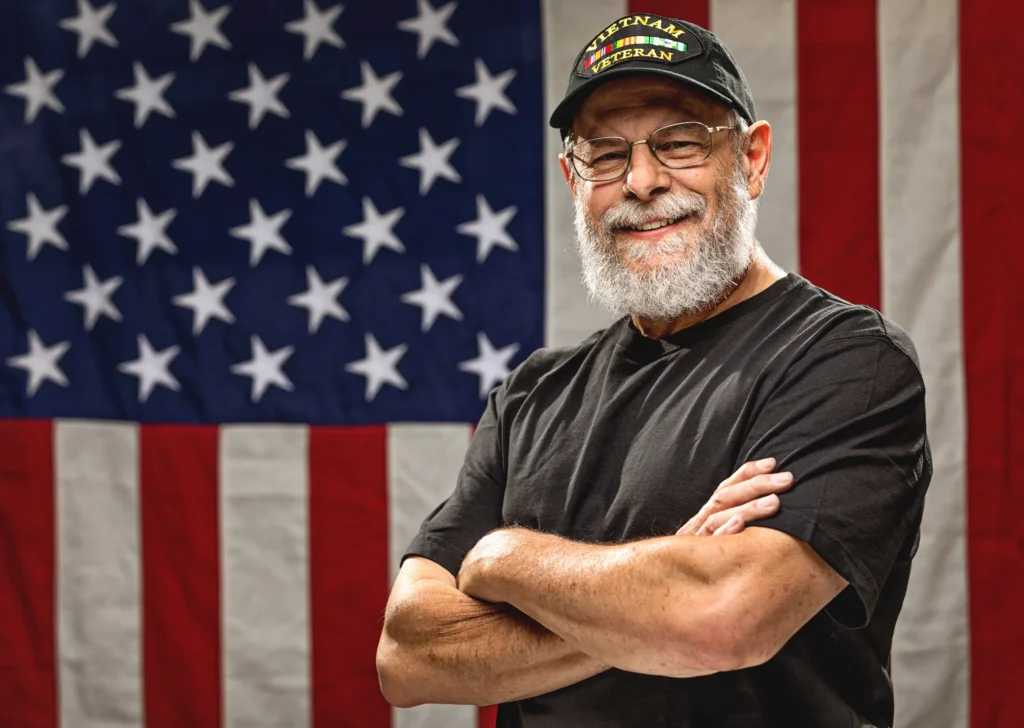
Vietnam War Veteran standing with arms crossed while smiling in front of American flag background

Veterans may qualify for expanded VA health care or disability benefits under the PACT Act if they meet certain service requirements: 

  • Have served in the Vietnam War, the Gulf War, Iraq, Afghanistan, or other combat zones post 9/11. 
  • Were deployed for the Global War on Terror, or were exposed to toxins during service at home or abroad. 

Important note: Even if you do not fit into any of the descriptions above, you may be able to receive VA health benefits according to your service. 

How the PACT Act Impacts VA Disability Benefits

You may be eligible for VA disability compensation

American flags waving in the sunshine

Veterans may be eligible for disability compensation (monthly, tax-free), depending on the severity and VA rating.

For example, the amount of compensation is influenced by the extent to which the service-connected condition affects daily life. VA disability ratings range from 0% to 100%, with higher ratings generally resulting in higher monthly compensation.

You may be eligible for VA health care

The PACT Act expanded eligibility for VA health care for many former service members with toxic exposure concerns. Eligible veterans may enroll in VA health care without first obtaining a VA disability rating.

Covered exposures may include burn pits, sand and dust, particulates, oil well or sulfur fires, chemicals, radiation, herbicides such as Agent Orange, depleted uranium, warfare agents, contaminated water, and other occupational or environmental hazards. 

Veterans may also receive specialized toxic screening to catch exposure-related health concerns early.  

Back pay and effective dates

The date a veteran submits a VA claim can influence when benefits begin. In many circumstances, VA disability pay begins on the claim’s effective date, which is usually when the VA receives the application or intent to file.

Prompt filing may help protect a veteran’s eligibility for retroactive payments, also known as “back pay.” Because effective date rules vary by claim type and individual circumstances, veterans may benefit from filing as soon as feasible and preserving documentation of their condition and service history.

When to Contact a Veterans Benefits Attorney

Contact Abes Baumann if you encounter the following scenario:

1. You were denied or underrated.

If your claim was denied or underrated, there are several options available.

First, an appeal. Here, you have the chance to appeal the decision in front of the Veterans Law Judge. 

Second, a supplemental claim, where you submit new and relevant evidence to support your claim. 

And third, higher-level review. This is where a senior review is requested to examine your file for errors. 

2. If your case involves a complex medical history or multiple conditions.

If you have a complex medical history, the VA requires clear proof of conditions directly related to military service. 

An attorney can help if your case involves a secondary condition, in which an illness is caused by an already service-connected disability, or overlapping diagnoses, where multiple physical or mental symptoms mask one another. 

Lastly, a long-term effects or delayed illnesses, such as those from toxic exposure or combat trauma. 

3. If you are a surviving spouse seeking DIC benefits.

If you lost your partner who was a veteran due to service-related injury or illness, you may be eligible for Dependency and Indemnity Compensation (DIC) benefits. This provides a surviving spouse with monthly tax-free compensation. The process can be complex; therefore, an attorney can be a great help.

4. If you want help building the strongest case the first time

Seeking help from an attorney does not have to wait until issues arise. 

A veterans benefits attorney can help early on, such as working on initial paperwork and the filing process to ensure it is error-free, preventing delays and reducing the stress that comes with it.

How Abes Baumann Helps Veterans With PACT Act Claims

VA benefits attorney meeting with veteran to work through PACT Act claim

The team at Abes Baumann is an expert in working with veterans across generations, with a focus on supporting cases involving toxic exposure. 

We instill a professional culture with clear guidance to help navigate through a confusing system. Veterans and their families should not be burdened in dealing with the health care and benefits they deserve; that is why we are here to help streamline the process of obtaining the care our veterans have rightly earned. 

Contact Abes Baumann today for any questions and to start the process.

FAQs About the PACT Act

What is the PACT Act in simple terms?

The PACT Act is a law which expand VA healthcare and benefits for veterans who are experiencing illnesses and injuries caused by toxic substances during their military service. 

What conditions are covered under the PACT Act?

Respiratory and breathing conditions, cancers and long-term illnesses, skin conditions and chronic inflammation issues, mental health and secondary impact, and Camp Lejeune-related conditions and contaminated water exposure.  

What does “presumptive condition” mean for VA benefits?

Conditions assumed to be caused by toxin exposure that provide veterans with a reduced proof burden in qualifying situations. 

Can I file a PACT Act claim if I was denied VA benefits before?

Yes, previous veterans who were denied VA benefits may be able to file a new claim. 

Can surviving spouses apply for benefits under the PACT Act?

Yes, in some cases. For example, surviving spouses of a veteran who dies from a service-connected condition linked to toxic exposure may be eligible for benefits, such as Dependency and Indemnity Compensation (DIC) and Survivors’ Pension benefits in qualifying situations.

Pain Can Be a Disability

By: Susan Paczak

The United States Court of Appeals for the Federal Circuit has made an important decision about how a veteran can prove they are entitled to compensation for a service-connected disability. In Saunders v. Wilkie, the Court decided that pain itself can be a disability.

To get VA compensation the Veteran must show:

  1. they had an injury or disease in service;
  2. they have a current disability; or
  3. a connection between the injury or disease in service.

In Saunders, the veteran was diagnosed with a knee condition in service. She showed that she had knee pain after service. A VA examiner said the knee pain after service was related to the knee condition diagnosed in service, and it caused her problems with daily activities and caused her to miss work. However, the VA examiner did not find a disease or injury to the knee, just the pain. The VA denied the claim.

The veteran appealed. The VA argued that since she had knee pain after service, but no diagnosed condition, she did not have a current disability for VA purposes. The Court overruled that finding ruling that pain by itself was a disability for VA purposes.

This decision does not mean that just because you have pain from an injury or disease in service, you will automatically receive benefits. You must show that you had a disease or injury diagnosed in service, that you now have pain, and that this pain affects your daily life, including your ability to work. In other words, you still need a medical provider to verify that the pain comes from the problem you had in service and how it affects you.

If you have any questions about how this decision may affect your claim, or any other claim related issues, please call and speak to one of our veteran’s benefits attorneys.

Please note the VA may decide to appeal this decision to the Supreme Court.

PRESIDENT’S BUDGET CUTS VETERANS BENEFITS

By: Susan Paczak

The budget proposed by the President increases the VA’s budget by 6%, but it also proposes to cut unemployability benefits for many veterans. Veterans rated at least 60% and unable to work because of their service‑connected disabilities can receive a rating of 100%. These are called Unemployability Benefits. Under this proposed budget, at age 62 the veteran would no longer be rated at 100% unemployable, they would go back to the rating they had before they were found unemployable. This means their benefits would be reduced by $1,000 or more per month. This cut would affect some of the most severely disabled elderly veterans, many of whom are in their 80s. This would plunge many veterans into poverty and possibly homelessness. For many disabilities, it is hard or even impossible to get 100% rating, but that disability rating is what makes the veteran unemployable. Additionally, for veterans with ratings for more than one disability, the formula the VA uses to combine these ratings makes it hard to get 100%, even if the separate ratings would add up to 100%. That is why unemployability benefits are so important.

Secretary of Veterans Affairs Shulkin, has defended these changes saying these veterans are still entitled to Social Security Retirement Benefits at age 62. However, at age 62, the veteran’s Social Security Retirement is a reduced retirement amount. Additionally, many veterans are not eligible for Social Security Retirement or will only receive a small amount because their service‑connected disabilities prevented them from working or forced them into part‑time or low-paying jobs.

Secretary Shulkin also said these cuts were needed to fund an increase in the VA Choice Progam. This means that the VA would take money from some veterans to pay for medical care for other veterans. This proposal does not live up to the VA’s motto, “To care for him who has borne the battle, his widow and orphan.” This motto was taken from President Lincoln’s second inaugural speech. President Lincoln would certainly not be in favor of these cuts to severely disabled veterans.

This budget is still just a proposed budget. This means that if enough pressure is put on the President and Congress, this proposal can be removed from the budget. All of the major veterans service organizations, such as DAV. American Legion, AMVETS, the Vietnam Veterans of America, the Paralyzed Veterans Association, and the VFW have come out in opposition to this proposal.

Please contact the White House, your Senators, and Representatives to tell them you oppose this proposal

Even if you do not receive unemployability benefits, please stand with your brother and sister veterans to oppose this cut in benefits.

Below are instructions for contacting the White House and your Senators and Representatives.

The White House :

To call: 202-456-6213

For email go to: https://www.whitehouse.gov/contact

By mail:

The White House
1600 Pennsylvania Avenue NW
Washington DC 2050

Congress:

You can find your U.S. Representative at www.house.gov. On the main page of this site, at the top right, you will see FIND YOUR REPRESENTATIVE. Enter your zipcode and it will display your Representative and their contact information.

You can find your Senator at www.senate.gov. On the main page of this site, at the top left, there is a drop down menu FIND YOUR SENATORS. Select your state and it will display your Senators and their contact information.

Filing a Notice of Disagreement with the VA

By: Susan Paczak

Before March 24, 2015, if veterans want to appeal a Rating Decision they just had to send something in writing to VA saying that they were not satisfied with the decision and wanted to contest it. On March 24, 2015, new rules, written by the VA, went into effect. Under these rules, if veterans want to appeal, they now have to send in a special form—Notice of Disagreement (NOD) (VA Form 21-0958). On this form, veterans indicate what part(s) of the decision they are appealing. In other words, if the veteran claimed service connection for five conditions and wants to appeal the decisions on all five, all five must be listed on the NOD. Veterans must also list what they are specifically appealing: service connection, rating, effective date, or other. The rules say that veterans must also state that they want appellate review. However, the form does not state that you have to ask for appellate review.

The rules that require use of the form were challenged by several VeteransService Organizations and the National Organization of Veterans Advocates (NOVA). Recently, the United States Court of Appeals for the Federal Circuit held that it was legal for the VA to require veterans to file a specific form to appeal. This means that unless one of the parties appeals to the Supreme Court, and the Court overturns the Circuit Courts ruling, veterans must follow these rules, or their appeals will be dismissed.

The VA is making the process for getting and appealing benefits more difficult. There are back logs of initial claims and appeals, and the VA is trying to make the process more complicated and difficult, in order to cut back on the number of veterans claiming benefits or appealing their claims. This is totally out of step with the VAs mission to help veterans. A more difficult process means that more veterans will need help with their appeals. An accredited attorney can help a veteran file and present an appeal to the VA to increase the veterans chance of receiving the benefits they earned.

Did You Serve with the 911th Aeromedical Evacuation or Aircraft Maintenance Squadrons or the 758th Airlift Squadron Between 1972-1982?

By: Susan Paczak

If you served with one of these units from 1972-1982, you may qualify for VA Benefits. The VA now recognizes that if you operated, maintained, or served aboard a C-123 aircraft known to have sprayed Agent Orange- you were exposed to Agent Orange. This means that you may be eligible for compensation if you suffer from diseases that the VA agrees were caused by Agent Orange. This includes diseases such as: type II diabetes, heart disease (heart attack, coronary artery disease), prostate cancer, lung cancer, certain types of leukemia, and other cancers and conditions.

In order to qualify you must have served regularly and repeatedly aboard a contaminated aircraft in one of the following positions:

  • –pilot/co-pilot
  • –flight nurse
  • –flight engineer
  • –aircraft loadmaster
  • –aircrew life support specialist
  • –aircraft maintenance specialist
  • –flight technician


Veterans who had active duty service, active duty for training, or inactive duty for training on such aircraft all qualify for benefits.

If you filed an application for benefits in the past that was denied or have never filed an application, you need to call out office to discuss this matter. When you call, please have the following information available: your DD214, any VA decisions on this issue, a list of the diseases that you believe were caused by Agent Orange, and a list of the doctors who have treated you these conditions. An attorney will then discuss this matter with you and give you a free analysis of your case.

TALK WITH AN ATTORNEY TODAY!

We only get paid when you win, so you don’t have to worry about hourly rates or fees. That means you’ll never see a bill unless you win. Fill out the form below and you’ll hear back from us immediately.